The story
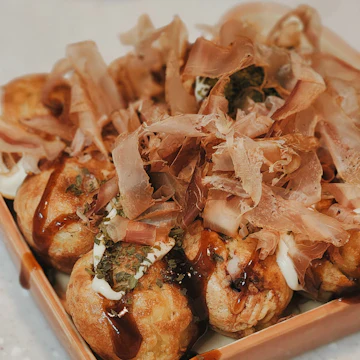
In 1930s Osaka, street vendors sold small grilled batter snacks called choboyaki and radioyaki, filled with bits of beef or konjac. Tomekichi Endo, a stall keeper who had moved from Aizu in northern Japan, is credited with trying octopus instead in 1935, perhaps inspired by the octopus dumplings of nearby Akashi. He named the result takoyaki and later opened a shop called Aizuya in Osaka's Nishinari ward, which still serves them plain, without sauce. After the war, sauce, mayonnaise and bonito flakes became standard, and takoyaki spread across Japan as a festival and street-corner snack.
Rival claims
Akashi, in neighbouring Hyogo, has an older egg-rich octopus dumpling, akashiyaki, often cited as the inspiration, but takoyaki itself is credited to Osaka.
Also known as octopus balls, tako yaki.
On the Meridish menu
Takoyaki was the street food course on menu No. 6 on October 6, 2026. Its clue in the game, which hints at the place without naming it:
Batter balls with octopus inside, flipped with picks in a dimpled iron pan. A street vendor here gets the credit, in 1935.
In Meridish, every dish is pinned to the town or city most widely credited with creating it. A guess within 25 km scores all 100 points. How scoring works.
Sources
- japan-experience.com/plan-your-trip/to-know/japanese-food-and-drink/takoyaki-and-osaka
- unseen-japan.com/takoyaki-japan-history
- en.wikipedia.org/wiki/Takoyaki
Food history is often disputed. Think we've pinned it in the wrong place? Tell us at hello@meridish.com, ideally with a source.