The story
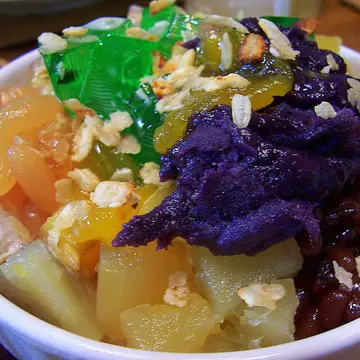
Halo-halo grew out of Japanese shaved-ice desserts brought to the Philippines by Japanese migrants before the Second World War. In Manila they sold monggo con hielo, sweetened mung beans over crushed ice with milk, a trade often traced to the Quinta Market in Quiapo, close to the American-built ice plant. Filipinos kept adding local favourites such as sweet beans, saba banana, jackfruit, coconut, jellies, leche flan and ube, until it became the crowded glass people now stir together. The name means 'mix-mix', which is also the instruction for eating it.
Rival claims
Pampanga is famous for celebrated versions (such as those of Arayat and Guagua), but these are later variations; the origin is generally traced to Japanese migrants in prewar Manila, often specifically to Quiapo.
Also known as haluhalo, halo halo, halu-halo.
On the Meridish menu
Halo-halo was the dessert course on menu No. 6 on October 6, 2026. Its clue in the game, which hints at the place without naming it:
Shaved ice layered with sweet beans, jellies, leche flan and purple yam ice cream. The name means 'mix-mix'.
In Meridish, every dish is pinned to the town or city most widely credited with creating it. A guess within 25 km scores all 100 points. How scoring works.
Sources
Food history is often disputed. Think we've pinned it in the wrong place? Tell us at hello@meridish.com, ideally with a source.