The story
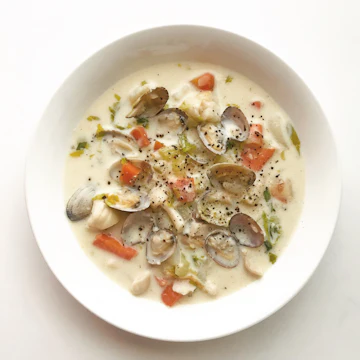
Chowder reached New England with European fishermen, whose one-pot fish stews took their name from the French chaudière, a cooking pot. The oldest known printed chowder recipe appeared in a Boston newspaper in 1751, written as a poem. Settlers swapped in the region's plentiful clams, added salt pork, onions and potatoes, and later milk or cream. By the 19th century Boston cookbooks treated it as a local classic. When New Yorkers began adding tomatoes, New Englanders took it personally, and in 1939 a Maine lawmaker even proposed making tomato chowder illegal.
Rival claims
Creamy clam chowder is really a New England regional dish rather than a strictly Boston invention: Maine, Cape Cod and the wider Massachusetts coast all have old chowder traditions, and the famous 1939 bill to outlaw tomatoes in chowder was proposed in Maine, not Massachusetts. Boston is still the city most associated with it, and the oldest known printed chowder recipe ran in a Boston paper in 1751.
Also known as New England clam chowder, Boston clam chowder, chowdah.
On the Meridish menu
Clam chowder (the creamy kind) was the soup course on menu No. 6 on October 6, 2026. Its clue in the game, which hints at the place without naming it:
Clams, potatoes, salt pork and cream. Around here, adding tomatoes is close to a crime.
In Meridish, every dish is pinned to the town or city most widely credited with creating it. A guess within 25 km scores all 100 points. How scoring works.
Sources
- whatscookingamerica.net/history/chowderhistory.htm
- csmonitor.com/USA/Society/2026/0325/new-england-clam-chowder-recipe
- newenglandhistoricalsociety.com/maines-great-clam-chowder-war-of-1939
- en.wikipedia.org/wiki/Clam_chowder
Food history is often disputed. Think we've pinned it in the wrong place? Tell us at hello@meridish.com, ideally with a source.