The story
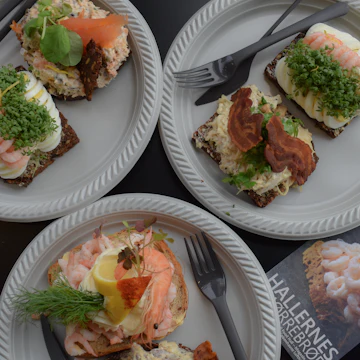
Danes have long eaten buttered rye bread topped with leftovers, a habit traced to farm workers' midday meals and to medieval trenchers, thick slices of bread used as plates. In the late 1800s, as factory workers got shorter lunch breaks, the open sandwich became the standard packed lunch. Copenhagen turned it into an art. Oskar Davidsen opened a wine bar there in 1888 where his wife Petra made sandwiches for hungry customers, and the menu eventually grew to around 170 kinds. Smørrebrød restaurants and lunch counters are still a fixture of the city.
Rival claims
No rival city. Open sandwiches on rye were eaten all over Denmark, especially by farm workers; Copenhagen's claim is to the elaborate restaurant version of the late 1800s, so it is a sensible representative pin for a national dish.
Also known as smorrebrod, Danish open sandwich, open-faced sandwich.
On the Meridish menu
Smørrebrød was the starter course on menu No. 6 on October 6, 2026. Its clue in the game, which hints at the place without naming it:
Open-faced rye sandwiches piled with herring, egg or roast pork, the classic lunch of this Nordic capital.
In Meridish, every dish is pinned to the town or city most widely credited with creating it. A guess within 25 km scores all 100 points. How scoring works.
Sources
- chowhound.com/1674669/origin-open-faced-sandwich-denmark
- traveller.com.au/what-is-smorrebrod-the-origins-of-the-danish-open-sandwich-h29qpw
- en.wikipedia.org/wiki/Sm%C3%B8rrebr%C3%B8d
Food history is often disputed. Think we've pinned it in the wrong place? Tell us at hello@meridish.com, ideally with a source.