The story
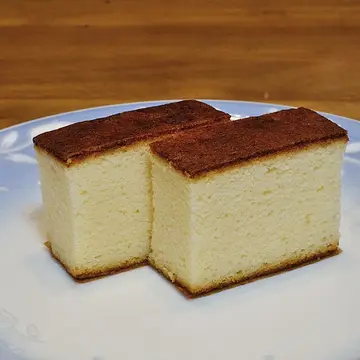
Castella came to Japan with Portuguese merchants and missionaries in the 16th century, during the Nanban trade centred on Nagasaki. The name comes from the Portuguese bolo de Castela, cake from Castile, and its closest relative is the Portuguese sponge pão-de-ló. Cakes of flour, eggs and sugar kept well on long voyages, and Nagasaki bakers adapted them to Japanese tastes, adding starch syrup to make them moister and coarse sugar on the base. Sugar was costly in the Edo period, so castella stayed a luxury, presented by the shogunate to imperial envoys. Sold in long boxes, it remains a Nagasaki speciality and counts as wagashi, a traditional Japanese sweet.
Also known as kasutera, カステラ, Nagasaki castella.
On the Meridish menu
Castella was the dessert course on menu No. 8 on October 8, 2026. Its clue in the game, which hints at the place without naming it:
A tall, honey-sweet sponge cake that Portuguese traders brought in the 1500s. It became the specialty of the port that was long the country's only door to the outside world.
In Meridish, every dish is pinned to the town or city most widely credited with creating it. A guess within 25 km scores all 100 points. How scoring works.
Sources
Food history is often disputed. Think we've pinned it in the wrong place? Tell us at hello@meridish.com, ideally with a source.