The story
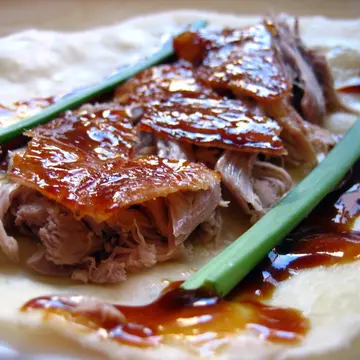
Peking duck carries the old Western name for Beijing. Roast duck was already served at the Mongol Yuan court and described in an imperial manual in 1330, and many accounts say the Nanjing style came north when the Ming emperors moved their capital to Beijing in the early 1400s. There it was refined into the lacquered, thin-skinned bird known today; the Bianyifang shop, said to date from 1416, roasted ducks in closed ovens. Palace kitchens developed hung-oven roasting, which Yang Quanren brought to the public when he opened Quanjude in 1864. By the 20th century the dish was a fixture of Chinese state banquets.
Rival claims
Roast duck was cooked for the Yuan court and the duck breed came from Nanjing, but the dish as known today was developed in Beijing (Bianyifang 1416, Quanjude 1864). Note: the dish name itself contains the city's old name.
Also known as Beijing roast duck, Peking roast duck, 北京烤鸭, Beijing kaoya.
On the Meridish menu
Peking duck was the main course on menu No. 8 on October 8, 2026. Its clue in the game, which hints at the place without naming it:
Lacquered roast duck with crackling skin, carved at the table and rolled in thin pancakes with scallion and sweet bean sauce. The first restaurant devoted to it is said to have opened in 1416.
In Meridish, every dish is pinned to the town or city most widely credited with creating it. A guess within 25 km scores all 100 points. How scoring works.
Sources
- en.wikipedia.org/wiki/Peking_duck
- en.wikipedia.org/wiki/Quanjude
- nationalgeographic.com/travel/article/peking-duck-complex-history-chinese-classic
Food history is often disputed. Think we've pinned it in the wrong place? Tell us at hello@meridish.com, ideally with a source.