The story
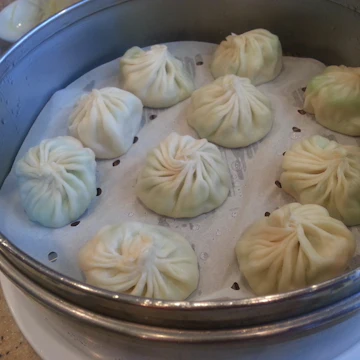
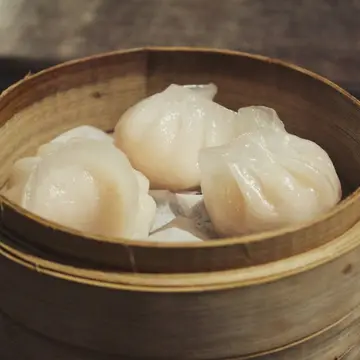
Har gow is credited to a teahouse in Wufeng, a village on the outskirts of Guangzhou, in the early 20th century. Local accounts say the owner of the Yi Zhen teahouse had shrimp caught in the river just outside and wrapped them in a thin wheat-starch dough that turns translucent when steamed. The dumpling became a staple of Cantonese yum cha, where tea is drunk with small dishes, and chefs are still judged by the pleats, at least seven and ideally ten or more. Cantonese emigrants carried it to Hong Kong and to Chinatowns around the world.
Also known as har gau, ha gow, xia jiao, shrimp dumplings, crystal shrimp dumplings.
On the Meridish menu
Har gow was the starter course on menu No. 3 on October 3, 2026. Its clue in the game, which hints at the place without naming it:
Translucent shrimp dumplings with at least seven pleats, the test of a dim sum chef. They were first served at a village teahouse on the edge of this southern port city.
In Meridish, every dish is pinned to the town or city most widely credited with creating it. A guess within 25 km scores all 100 points. How scoring works.
Sources
- tasteasianfood.com/har-gow
- themanual.com/food-and-drink/dim-sum-perfect-shrimp-dumpling
- en.wikipedia.org/wiki/Har_gow
Food history is often disputed. Think we've pinned it in the wrong place? Tell us at hello@meridish.com, ideally with a source.