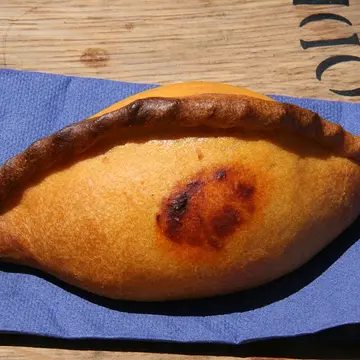
The story
Spanish settlers brought the empanada to the Andes, and in Potosí, the high, cold silver-mining city, it evolved into a baked pastry filled with a juicy, spicy stew. The earliest written evidence is a recipe book compiled in Potosí in 1776 by Doña Josepha de Escurrechea, rediscovered by researcher Beatriz Rossells. The name salteña, after Salta in Argentina, only appeared after independence; a popular tale credits the exiled Argentine writer Juana Manuela Gorriti, whose family is said to have sold empanadas in Bolivia in the 1830s, but Potosí historians reject it. Today Bolivians eat salteñas mid-morning, and Cochabamba and Sucre claim the best ones.
Rival claims
The name comes from exiles from Salta, Argentina (Juana Manuela Gorriti's family sold empanadas in Tarija in 1831-32); Cochabamba and Sucre claim the best versions. A 1776 Potosí recipe book is the earliest record.
Also known as salteñas, saltena, Bolivian empanada.
On the Meridish menu
Salteña was the street food course on menu No. 8 on October 8, 2026. Its clue in the game, which hints at the place without naming it:
A juicy baked pasty with a sweet golden crust and soupy stew inside, eaten mid-morning. It's named after a province in Argentina, but this silver-mining city is its cradle.
In Meridish, every dish is pinned to the town or city most widely credited with creating it. A guess within 25 km scores all 100 points. How scoring works.
Sources
- en.wikipedia.org/wiki/Salte%C3%B1a
- correodelsur.com/cultura/20201113/aclaran-cual-es-el-origen-potosino-de-la-saltena.html
Food history is often disputed. Think we've pinned it in the wrong place? Tell us at hello@meridish.com, ideally with a source.