The story
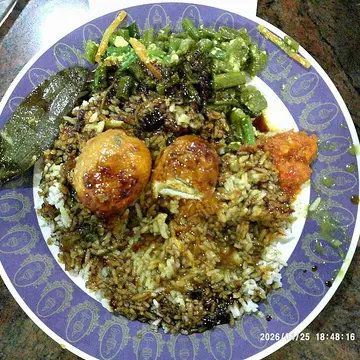
Nasi kandar was born on the waterfront of George Town, Penang, in the early 1900s. Indian Muslim hawkers, mostly Tamil, sold rice and curry to dock workers at Weld Quay, carrying the food in pots hung from either end of a pole across their shoulders; 'kandar' refers to that shoulder pole, and 'nasi' means rice. By the 1930s the sellers also roamed door to door or set up under shady trees. Later they moved into stalls and restaurants offering dozens of curries and sides. The signature style is 'banjir', or flooded, with several curry gravies poured over the rice, and it is now loved across Malaysia.
Also known as Penang nasi kandar, nasi kandar banjir.
On the Meridish menu
Nasi kandar was the rice & noodles course on menu No. 23 on October 23, 2026. Its clue in the game, which hints at the place without naming it:
Rice flooded with mixed curries, first carried on a shoulder pole by Indian Muslim hawkers feeding dockworkers on this island's waterfront in the early 1900s.
In Meridish, every dish is pinned to the town or city most widely credited with creating it. A guess within 25 km scores all 100 points. How scoring works.
Sources
Food history is often disputed. Think we've pinned it in the wrong place? Tell us at hello@meridish.com, ideally with a source.