The story
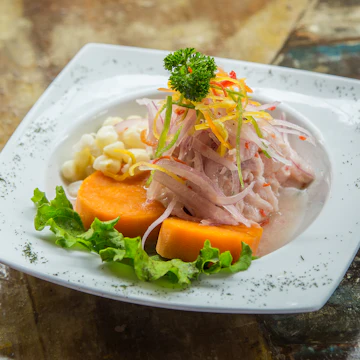
People on Peru's coast have eaten raw fish seasoned with chilli and salt for a very long time, and one theory credits the Moche of the north coast, nearly 2,000 years ago, who may have used the juice of a local fruit. Limes and onions arrived with the Spanish, and the citrus-cured dish known today took shape in colonial times, with Lima's cevicherías later making it a national lunch. Peru declared ceviche part of its cultural heritage in 2004, and in 2023 UNESCO added the traditions around it to its intangible heritage list.
Rival claims
Ecuador, Mexico and other Pacific-coast countries have old ceviche traditions of their own, and within Peru the dish belongs to the whole coast, with one theory tracing it to the Moche of the north coast near Trujillo. Lima is a sensible representative pin for Peru's claim rather than a documented birthplace.
Also known as cebiche, seviche, Peruvian ceviche.
On the Meridish menu
Ceviche was the starter course on menu No. 5 on October 5, 2026. Its clue in the game, which hints at the place without naming it:
Raw fish 'cooked' in lime juice with chilli and red onion. This country has declared it part of its national heritage.
In Meridish, every dish is pinned to the town or city most widely credited with creating it. A guess within 25 km scores all 100 points. How scoring works.
Sources
- ich.unesco.org/en/decisions/18.COM/8.B.4
- remezcla.com/food/peruvian-ceviche-declared-intangible-cultural-heritage-of-humanity-by-unesco
- peru.info/en-us/gastronomy/news/2/13/cebiche-could-be-a-world-heritage-site
- en.wikipedia.org/wiki/Ceviche
Food history is often disputed. Think we've pinned it in the wrong place? Tell us at hello@meridish.com, ideally with a source.