The story
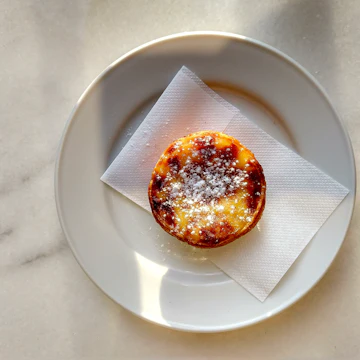
Pastel de nata was born at the Jerónimos Monastery in Belém, on Lisbon's western waterfront. Portuguese convents are said to have used egg whites to starch clothes, leaving plenty of yolks for sweets. After the liberal revolution of 1820 put religious houses under pressure, someone from the monastery began selling custard tarts in a shop attached to a nearby sugar refinery. When the monastery was closed in 1834, the recipe passed to the refinery, and in 1837 the bakery now called Pastéis de Belém started baking them. It still guards the secret recipe, and the tart has spread around the world.
Also known as pastéis de nata, pastel de Belém, pastéis de Belém, Portuguese custard tart.
On the Meridish menu
Pastel de nata was the dessert course on menu No. 1 on October 1, 2026. Its clue in the game, which hints at the place without naming it:
Custard tarts in flaky pastry, first baked by monks at a monastery here and sold after it closed in 1834.
In Meridish, every dish is pinned to the town or city most widely credited with creating it. A guess within 25 km scores all 100 points. How scoring works.
Sources
- pasteisdebelem.pt/en/history
- visitlisboa.com/en/about-turismo-lisboa/associates/pasteis-de-belem
- en.wikipedia.org/wiki/Pastel_de_nata
Food history is often disputed. Think we've pinned it in the wrong place? Tell us at hello@meridish.com, ideally with a source.