The story
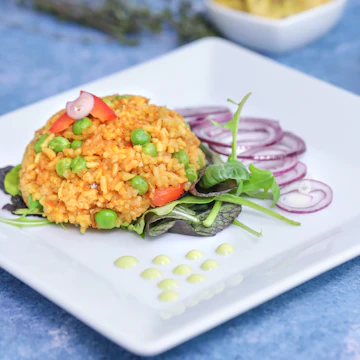
Jollof rice takes its name from the Wolof, or Jolof, empire that ruled much of today's Senegal from around the 14th century. Its ancestor is thieboudienne, or ceebu jën, a one-pot dish of rice, fish and tomato-rich vegetables. Tradition credits Penda Mbaye, a cook from the Guet Ndar fishing quarter of Saint-Louis, with creating it in the 19th century, when colonial trade made imported broken rice a staple. Fishless, tomato-red versions travelled along trade routes across West Africa, where Ghanaians and Nigerians now argue cheerfully about who makes it best.
Rival claims
Ghana, Nigeria, Sierra Leone and others have their own jollof traditions and fierce opinions about the best version, but none seriously claims to have originated it. The name points to the Wolof (Jolof) heartland of Senegambia in general; Saint-Louis is the specific place credited with thieboudienne, the dish jollof grew from, though that attribution rests on oral tradition.
Also known as jollof, benachin, riz au gras.
On the Meridish menu
Jollof rice was the rice & noodles course on menu No. 1 on October 1, 2026. Its clue in the game, which hints at the place without naming it:
Ghana and Nigeria argue over who cooks it best, but it's named after an old empire in this country.
In Meridish, every dish is pinned to the town or city most widely credited with creating it. A guess within 25 km scores all 100 points. How scoring works.
Sources
- ich.unesco.org/en/decisions/16.COM/8.B.36
- kitchenbutterfly.com/part-1-a-short-history-of-jollof-rice
- qz.com/africa/2103604/senegals-thieboudiene-listed-as-unesco-cultural-heritage
- en.wikipedia.org/wiki/Jollof_rice
Food history is often disputed. Think we've pinned it in the wrong place? Tell us at hello@meridish.com, ideally with a source.