The story
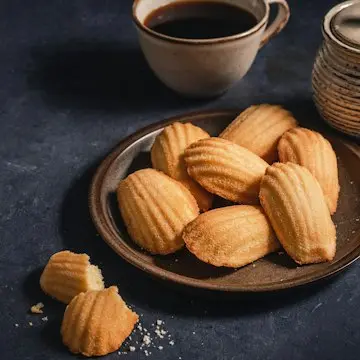
The madeleine is tied to Commercy, a small town in Lorraine. The best-known legend says that in the 1750s a kitchen maid named Madeleine baked the shell-shaped cakes at the château for Stanislaus Leszczyński, the exiled King of Poland and Duke of Lorraine, when the pastry cook fell ill, and the cakes were named after her. Other tales credit a pilgrim on the road to Santiago, nearby Liverdun, or the chef Jean Avice. Better documented is that Commercy began making them on a large scale in the 1760s, and later sold them on the railway platform to passing travellers. Marcel Proust made them famous by dipping one in tea.
Rival claims
Nearby Liverdun shares the claim, and other legends credit a pilgrim or the chef Jean Avice; this town is where they were first made commercially, from the 1760s.
Also known as madeleines, madeleine de Commercy, petite madeleine.
On the Meridish menu
Madeleine was the dessert course on menu No. 30 on October 30, 2026. Its clue in the game, which hints at the place without naming it:
Shell-shaped little sponge cakes that a novelist famously dipped in tea. Legend says a maid first baked them in this small town's château for an exiled Polish king.
In Meridish, every dish is pinned to the town or city most widely credited with creating it. A guess within 25 km scores all 100 points. How scoring works.
Sources
- en.wikipedia.org/wiki/Madeleine_(cake)
- connexionfrance.com/magazine/why-madeleines-have-enduring-appeal-in-france/701998
Food history is often disputed. Think we've pinned it in the wrong place? Tell us at hello@meridish.com, ideally with a source.