The story
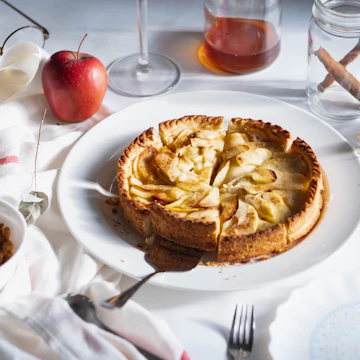
Tarte Tatin takes its name from Stéphanie and Caroline Tatin, who ran the Hôtel Tatin opposite the railway station in Lamotte-Beuvron, a hunting town in the Sologne, from the 1880s. The favourite legend says Stéphanie, rushed off her feet, left apples cooking too long in butter and sugar, then rescued them by laying pastry on top and baking the tart upside down. Historians point out that such tarts were already a local tradition. Either way, the sisters' version became famous after their deaths, helped by the food writer Curnonsky and later by Maxim's in Paris.
Rival claims
Upside-down fruit tarts were already made in the Sologne region, so the Tatin sisters probably popularised rather than invented it, but no other town has a serious claim to the tarte Tatin itself.
Also known as tatin, upside-down apple tart, tarte des demoiselles Tatin.
On the Meridish menu
Tarte Tatin was the dessert course on menu No. 12 on October 12, 2026. Its clue in the game, which hints at the place without naming it:
An upside-down caramelised apple tart, made famous by two sisters who ran a hotel in this small town.
In Meridish, every dish is pinned to the town or city most widely credited with creating it. A guess within 25 km scores all 100 points. How scoring works.
Sources
- frenchentree.com/living-in-france/food-recipes/desserts/french-food-classics-tarte-tatin
- dailymaverick.co.za/article/2021-11-26-the-strange-case-of-the-tarte-tatin
- en.wikipedia.org/wiki/Tarte_Tatin
Food history is often disputed. Think we've pinned it in the wrong place? Tell us at hello@meridish.com, ideally with a source.