The story
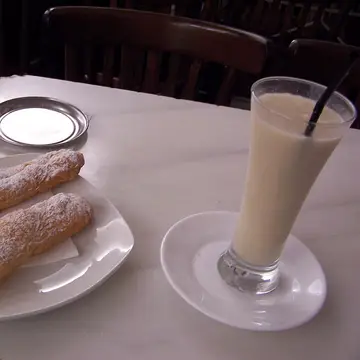
Tiger nuts were prized in ancient Egypt, and Arab settlers spread their cultivation around Valencia in medieval times. Writings from the 13th century mention llet de xufes, tiger-nut milk, the likely ancestor of today's drink. A popular legend says King James I tasted it and called it gold, a pun often linked to the name horchata, though the word probably comes from a Latin term for a barley drink. The irrigated farmland around Alboraya, on Valencia's northern edge, still grows most of the crop, and the area is known for fartons, glazed buns made for dunking.
Rival claims
No rival region. Within Valencia, the town of Alboraya, about 4 km north of the city centre, is often called the home of horchata as the main tiger-nut growing town; the current pin is within 10 km of it, so it works either way.
Also known as horchata de chufa, orxata, tiger nut milk, Valencian horchata.
On the Meridish menu
Horchata (tiger-nut milk) was the aperitif course on menu No. 7 on October 7, 2026. Its clue in the game, which hints at the place without naming it:
A chilled, milky drink pressed from tiger nuts, traditionally served with long sweet buns for dunking.
In Meridish, every dish is pinned to the town or city most widely credited with creating it. A guess within 25 km scores all 100 points. How scoring works.
Sources
- visitvalencia.com/en/what-to-do-valencia/gastronomy/where-to-drink/horchata
- directoalpaladar.com/otras-bebidas/horchata-chufa-oro-blanco-que-nace-huerta-valenciana/amp
- en.wikipedia.org/wiki/Horchata
Food history is often disputed. Think we've pinned it in the wrong place? Tell us at hello@meridish.com, ideally with a source.