The story
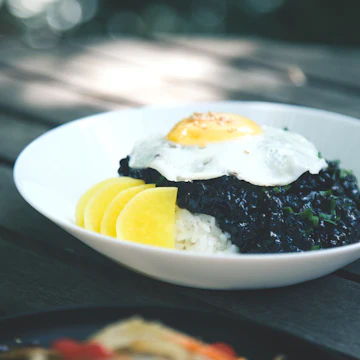
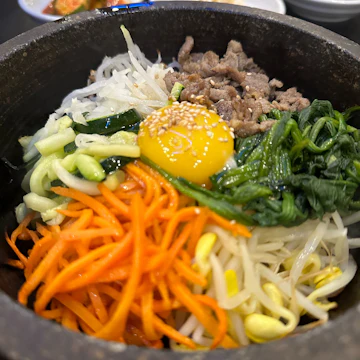
Bibimbap, meaning 'mixed rice', is an old Korean way of eating more than one cook's invention. The first known recipe appears in Siuijeonseo, a 19th-century cookbook, and popular theories say it began as a way to share leftovers from ancestral rites, or to feed farmhands at harvest. Jeonju, the ancestral seat of the Joseon royal family, became famous for an elaborate version with rice cooked in beef-bone broth and dozens of toppings. Today the city, a UNESCO City of Gastronomy, is widely treated as bibimbap's spiritual home and holds an annual festival in its honour.
Rival claims
Bibimbap has no single inventor or birthplace; Jeonju claims to be its home, but Jinju (with beef tartare), Tongyeong, Andong and, historically, Haeju and Pyongyang in the North are also famous for their own versions. The clue's 'spiritual home' wording handles this well.
Also known as bibimbab, Jeonju bibimbap, dolsot bibimbap, Korean mixed rice.
On the Meridish menu
Bibimbap was the rice & noodles course on menu No. 7 on October 7, 2026. Its clue in the game, which hints at the place without naming it:
Rice topped with seasoned vegetables, beef and a fried egg, mixed with chilli paste. This city is its spiritual home.
In Meridish, every dish is pinned to the town or city most widely credited with creating it. A guess within 25 km scores all 100 points. How scoring works.
Sources
- nationalgeographic.com/travel/article/bibimbap-koreas-famous-dish
- nationalgeographic.com/travel/article/best-place-to-eat-in-south-korea-jeonju
- en.wikipedia.org/wiki/Bibimbap
Food history is often disputed. Think we've pinned it in the wrong place? Tell us at hello@meridish.com, ideally with a source.