The story
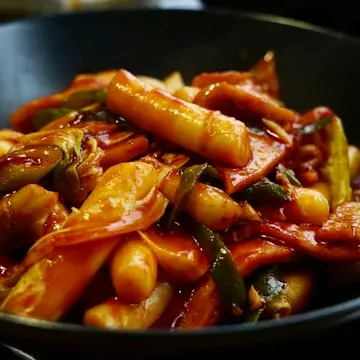
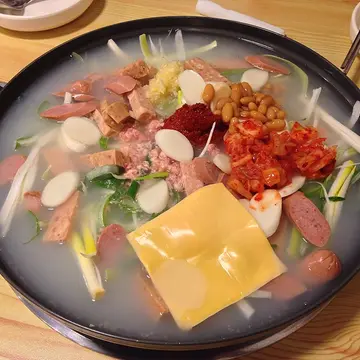
Budae-jjigae, 'army base stew', grew out of hunger after the Korean War, when people living near US military bases made use of surplus food. Spam, sausages and ham were cooked Korean-style with kimchi and red pepper paste, later joined by baked beans, cheese and instant noodles. Several base towns claim it, notably Pyeongtaek, but Uijeongbu, just north of Seoul, is the most cited: Heo Gi-suk said she began serving it at her restaurant, Odeng Sikdang, which opened there in 1960, and the city now has a whole street of budae-jjigae restaurants. A version named after Lyndon Johnson, who visited in 1966, is called Johnson-tang.
Rival claims
Its exact origin is uncertain and other base towns, notably Pyeongtaek (Songtan), also claim it; Uijeongbu is the most cited and has a budae-jjigae street.
Also known as 부대찌개, army stew, army base stew, Johnson-tang.
On the Meridish menu
Budae-jjigae was the soup course on menu No. 26 on October 26, 2026. Its clue in the game, which hints at the place without naming it:
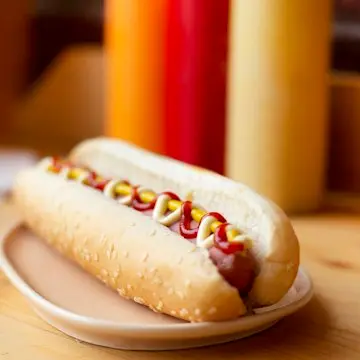
'Army base stew': Spam, hot dogs, baked beans and instant noodles in a spicy kimchi broth. Born from US army surplus in this city just north of the capital, after a war.
In Meridish, every dish is pinned to the town or city most widely credited with creating it. A guess within 25 km scores all 100 points. How scoring works.
Sources
- en.wikipedia.org/wiki/Budae-jjigae
- en.wikipedia.org/wiki/Uijeongbu
- korea.stripes.com/food-drink/army-base-stew-korea.html
Food history is often disputed. Think we've pinned it in the wrong place? Tell us at hello@meridish.com, ideally with a source.