The story
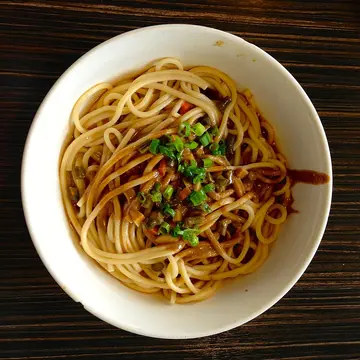
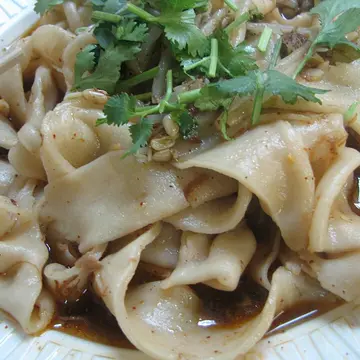
Biangbiang noodles are a staple of Xi'an and the surrounding Guanzhong plain in Shaanxi, where workers short on time favoured thick, belt-wide noodles that are quick to stretch. The name imitates the slap of dough against the counter as cooks pull it. Its famously complex written character, with 58 strokes in its traditional form, has its own legend: a hungry, penniless scholar travelling to nearby Xianyang is said to have invented the character for a noodle shop that had no way to write the word, earning a free meal in return. Dressed with sizzling chilli oil, the noodles are now popular across China and abroad.
Rival claims
Really a dish of the whole Guanzhong plain around Xi'an; the legend of the character's invention is set in neighbouring Xianyang.
Also known as biang biang mian, youpo chemian, 油泼扯面, belt noodles, Xi'an noodles.
On the Meridish menu
Biangbiang noodles was the rice & noodles course on menu No. 29 on October 29, 2026. Its clue in the game, which hints at the place without naming it:
Hand-pulled noodles as wide as a belt, slapped on the counter as they stretch. The name needs a 58-stroke character. A workers' staple in this ancient walled capital.
In Meridish, every dish is pinned to the town or city most widely credited with creating it. A guess within 25 km scores all 100 points. How scoring works.
Sources
- en.wikipedia.org/wiki/Biangbiang_noodles
- magazine.preferredhotels.com/articles/vol27-fooddrink-a-rich-and-delicious-history
Food history is often disputed. Think we've pinned it in the wrong place? Tell us at hello@meridish.com, ideally with a source.