The story
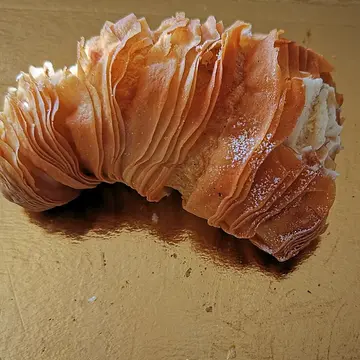
The sfogliatella began in the convent of Santa Rosa, perched on the cliffs between Conca dei Marini and Furore on the Amalfi Coast. Legend says that in the 1600s one of the cloistered nuns mixed semolina, ricotta and candied fruit, wrapped the filling in a hood-shaped pastry and created the Santa Rosa. The nuns guarded the recipe for generations, until in 1818 the Neapolitan pastry cook Pasquale Pintauro, said to have obtained it from a nun in his family, began selling a version in his shop on Via Toledo in Naples. He dropped the cream and fruit topping and perfected the crackly, many-layered riccia that Naples made famous.
Rival claims
The flaky 'riccia' version was popularised in Naples by pastry chef Pasquale Pintauro from 1818; the original came from the Santa Rosa monastery here.
Also known as sfogliatelle, sfogliatella riccia, sfogliatella Santa Rosa, sfogliatella napoletana.
On the Meridish menu
Sfogliatella was the dessert course on menu No. 11 on October 11, 2026. Its clue in the game, which hints at the place without naming it:
A seashell of crackly pastry layers filled with ricotta and candied orange. Nuns in a monastery perched on the cliffs of a famous coast created it in the 1600s.
In Meridish, every dish is pinned to the town or city most widely credited with creating it. A guess within 25 km scores all 100 points. How scoring works.
Sources
Food history is often disputed. Think we've pinned it in the wrong place? Tell us at hello@meridish.com, ideally with a source.