The story
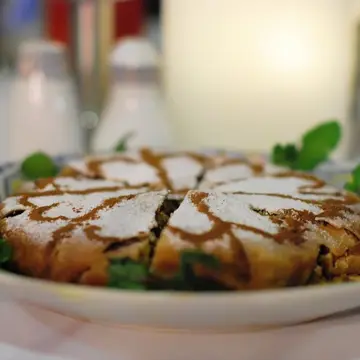
Pastilla's roots lie in al-Andalus, Muslim Spain, where 13th-century cookbooks describe pigeon cooked with cinnamon, almonds and saffron, much like its filling today. Refugees leaving Spain from the late 1400s onward are said to have carried the idea to Morocco, and its name probably comes from a Spanish word for a small pastry. The city most closely tied to it is Fes, whose old medina cooks still layer pigeon, egg and almonds in paper-thin pastry and dust the top with sugar and cinnamon for weddings and feasts. Chicken and seafood versions are popular elsewhere, including Marrakesh and the coast.
Rival claims
Its roots are in al-Andalus (Moorish Spain); this city is the one most associated with the classic pigeon version, while Marrakesh and coastal towns make chicken and seafood versions.
Also known as bastilla, b'stilla, bisteeya, bastila, بسطيلة.
On the Meridish menu
Pastilla was the starter course on menu No. 9 on October 9, 2026. Its clue in the game, which hints at the place without naming it:
A flaky pie of pigeon, egg and almonds, dusted with sugar and cinnamon. Exiles from Spain are said to have carried it to this ancient walled city with its maze-like medina.
In Meridish, every dish is pinned to the town or city most widely credited with creating it. A guess within 25 km scores all 100 points. How scoring works.
Sources
Food history is often disputed. Think we've pinned it in the wrong place? Tell us at hello@meridish.com, ideally with a source.