The story
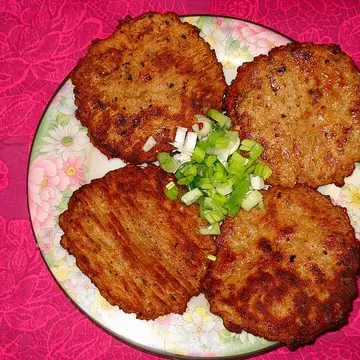
The chapli kebab is the signature of Peshawar, the old frontier city near the Khyber Pass, and of Pashtun cooking in general. Its name may come from the Pashto word chaprikh, meaning flat, or from chappal, the Urdu word for sandal, which the wide patty resembles. Minced beef or mutton is mixed with spices, tomato, chilli, flour and pomegranate seeds, then fried in animal fat over a wood fire. Some kebab makers trace the recipe to Takht-i-Bahi in nearby Mardan, where buffalo meat is preferred. From Peshawar's bazaars, such as Qissa Khwani, it spread across Pakistan, Afghanistan and India.
Rival claims
Some kebab makers trace the recipe to Takht-i-Bahi in Mardan District, about 45 km from Peshawar. The name may come from the Pashto chaprikh, 'flat', rather than chappal, 'sandal'.
Also known as chapli kabab, chappli kebab, Peshawari chapli kebab, chapal kebab.
On the Meridish menu
Chapli kebab was the street food course on menu No. 15 on October 15, 2026. Its clue in the game, which hints at the place without naming it:
A wide, flat, spicy minced-meat patty with tomato and pomegranate seeds, fried in fat. Its name is often said to come from a sandal, and it's the pride of an old frontier city on the road to Kabul.
In Meridish, every dish is pinned to the town or city most widely credited with creating it. A guess within 25 km scores all 100 points. How scoring works.
Sources
Food history is often disputed. Think we've pinned it in the wrong place? Tell us at hello@meridish.com, ideally with a source.