The story
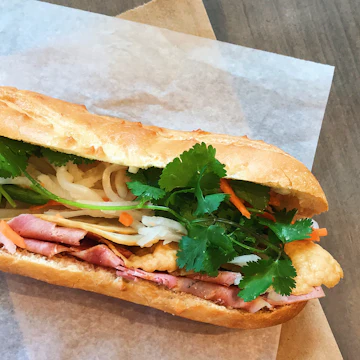
French colonists brought wheat bread to Vietnam in the second half of the 1800s, and baguettes with pâté or cold cuts became a snack in cities from Hanoi to Saigon. The sandwich known today took shape in Saigon in the 1950s. Hòa Mã, a shop opened by a couple who had moved south after the country was divided in 1954, is often credited with shortening the loaf and filling it with cheaper pickled vegetables, herbs and chilli alongside the meats. After 1975, Vietnamese emigrants carried bánh mì to Australia, France, Canada and the United States.
Rival claims
Baguettes with pâté or cold cuts were already sold in Hanoi and other cities in the colonial era, but the stuffed, vegetable-heavy sandwich known worldwide is credited to Saigon in the 1950s.
Also known as banh mi, Vietnamese baguette, Vietnamese sandwich, Saigon sandwich.
On the Meridish menu
Bánh mì was the street food course on menu No. 4 on October 4, 2026. Its clue in the game, which hints at the place without naming it:
A crackly baguette stuffed with pâté, pickled carrot, chilli and coriander, a legacy of French colonial bakeries.
In Meridish, every dish is pinned to the town or city most widely credited with creating it. A guess within 25 km scores all 100 points. How scoring works.
Sources
- saigoneer.com/saigon-food-culture/7336-how-the-bánh-mì-became-world-famous
- traveller.com.au/vietnamese-street-food-where-to-find-the-best-banh-mi-in-hoi-an-vietnam-gttj4x
- en.wikipedia.org/wiki/B%C3%A1nh_m%C3%AC
Food history is often disputed. Think we've pinned it in the wrong place? Tell us at hello@meridish.com, ideally with a source.