The story
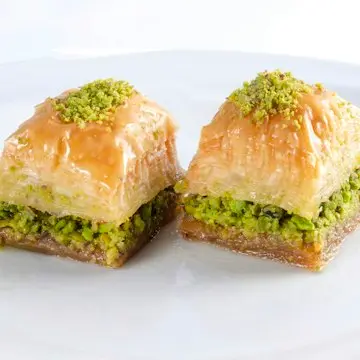
Baklava has many claimed ancestors, from Byzantine layered cakes to medieval Arab almond pastries and the folded breads of the Central Asian Turks, and its roots are still debated. The layered, syrup-soaked version known today probably took shape in the 15th and 16th centuries in the kitchens of Topkapı Palace in Istanbul, the Ottoman capital. Each Ramadan the sultan sent trays of it to the janissaries in a ceremony known as the Baklava Procession, a custom that lasted until 1826. From the palace it spread across the empire. Gaziantep, a pistachio city in southeastern Turkey, has its own protected Antep baklava, with shops dating back to 1871.
Rival claims
Origins are contested (Greek, Central Asian and Arab precursors are all proposed); Gaziantep is the most famous baklava city and holds the 'Antep baklava' name.
Also known as baklawa, paklava, pakhlava.
On the Meridish menu
Baklava was the dessert course on menu No. 14 on October 14, 2026. Its clue in the game, which hints at the place without naming it:
Paper-thin pastry layered with nuts and soaked in syrup. Its modern form is credited to the kitchens of a sultan's palace here, though a pistachio city to the southeast is just as proud.
In Meridish, every dish is pinned to the town or city most widely credited with creating it. A guess within 25 km scores all 100 points. How scoring works.
Sources
- en.wikipedia.org/wiki/Baklava
- aramcoworld.com/articles/2015/capital-of-baklava
- sbs.com.au/food/article/biting-into-baklavas-sweet-yet-controversial-history/6bb5ifm2d
Food history is often disputed. Think we've pinned it in the wrong place? Tell us at hello@meridish.com, ideally with a source.